
CE-20PA1010X - OASiS 10: Introduction to Industrial Process and Automation
This course, Introduction to Industrial Process and Automation, offers a foundational overview of process automation and control. Learners examine the advantages and disadvantages of industrial automation and review real-world examples of automation in manufacturing. The course introduces the structure of automation systems, including key components such as measurement devices, actuators, and controllers.
Learners explore the hierarchy of automation and gain familiarity with essential technologies including Programmable Logic Controllers (PLC), Distributed Control Systems (DCS), Human-Machine Interfaces (HMI), and historians. The course guides learners through feedback control, the Proportional-Integral-Derivative (PID) controller, cascade and feedforward control methods, as well as the challenges of batch process automation.
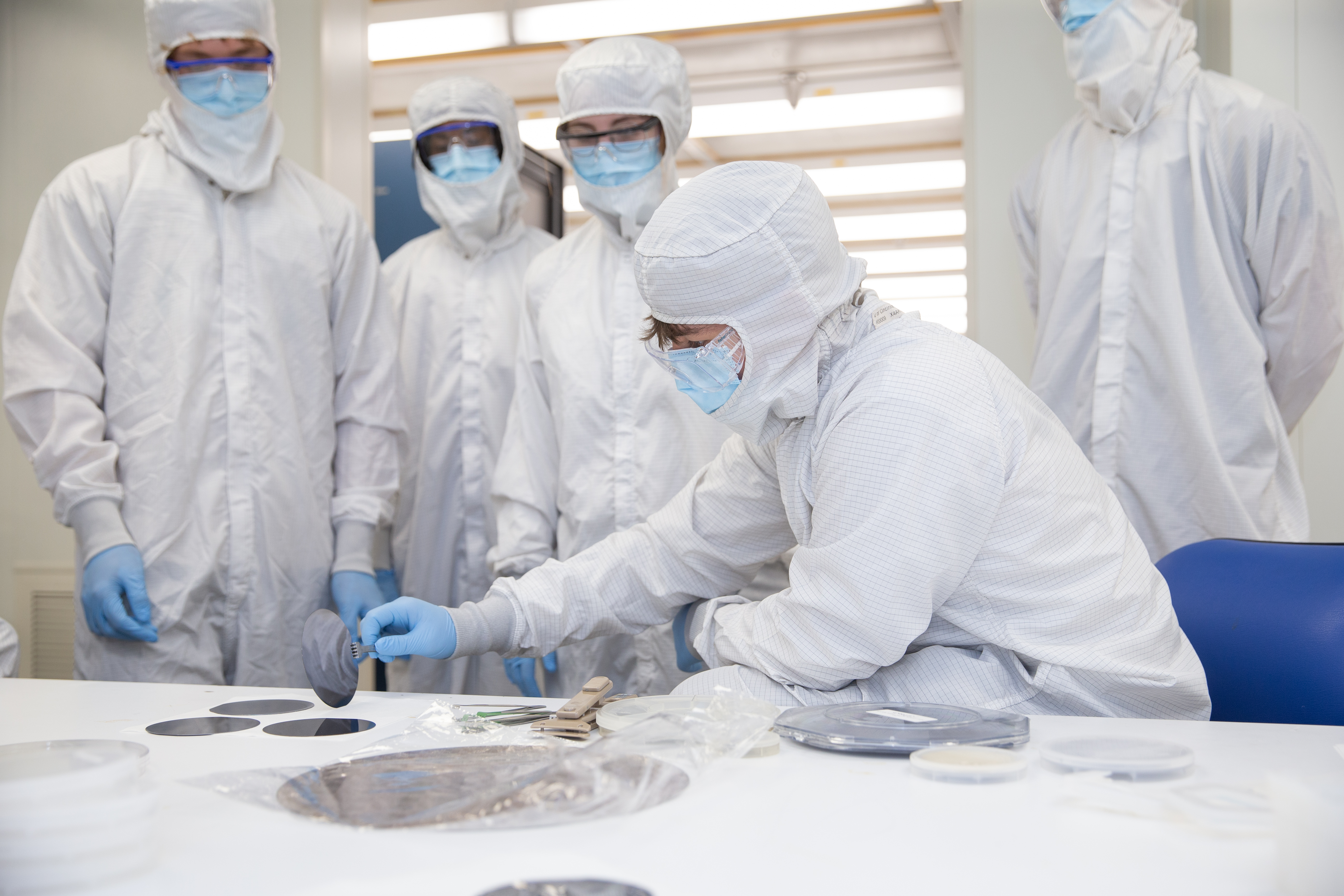
Course Outline
This course focuses on the following modules:
- Introduction to Process Automation and Control
- Automation System Structure
- Introduction to Industrial Process Automation
- Control Loops and Control Strategies
Learner Outcomes
By the end of this course, learners will be able to:
- Define Process Automation.
- Discuss the advantages and disadvantages of process automation.
- Explain examples of automation in manufacturing.
- Identify resources describing career opportunities in industrial automation.
Who Should Register?
This course is ideal for learners interested in semiconductor manufacturing, materials, devices, and circuits. A foundational knowledge of physics and chemistry at a high school level is helpful but not required. No prior knowledge on CMOS or other semiconductor technology is required.
Select a section to register
OASiS
The Ohio-Southwest Alliance on Semiconductors and Integrated Scalable Manufacturing (OASiS) team was established in 2022 with the support of Intel. The goal of OASiS is to provide individuals with strong STEM backgrounds with the very fundamental skills required to pursue semiconductor careers. Altogether, OASiS has engaged 15 universities, colleges, community colleges, and regional campuses in southwest Ohio.
To date, over 1000 students with backgrounds in electrical and computer engineering, computer science, chemical engineering, mechanical and material engineering, physics, and chemistry have successfully gone through the program. The ultimate goal of the OASiS team is to be able to provide semiconductor workforce development opportunities by delivering modules to students interested in the area of semiconductor manufacturing, materials, devices and circuits so they can be part of the needed 100,000+ workforce needed in the field by 2030.
The College of Engineering and Applied Sciences (CEAS)
The College of Engineering and Applied Science is organized into eight departments. Each offers multiple degrees, both graduate and undergraduate, and provides students with rich experience in the classroom, in the lab and on the job.
- Aerospace Engineering & Engineering Mechanics
- Biomedical Engineering
- Chemical and Environmental Engineering
- Civil and Architectural Engineering and Construction Management
- Computer Science
- Electrical and Computer Engineering
- Engineering and Computing Education
With real-world experiences at firms and research centers across the country and around the world, our students graduate with skills and confidence to turn ideas into reality, solving tomorrow’s problems today and seeking out new challenges.